
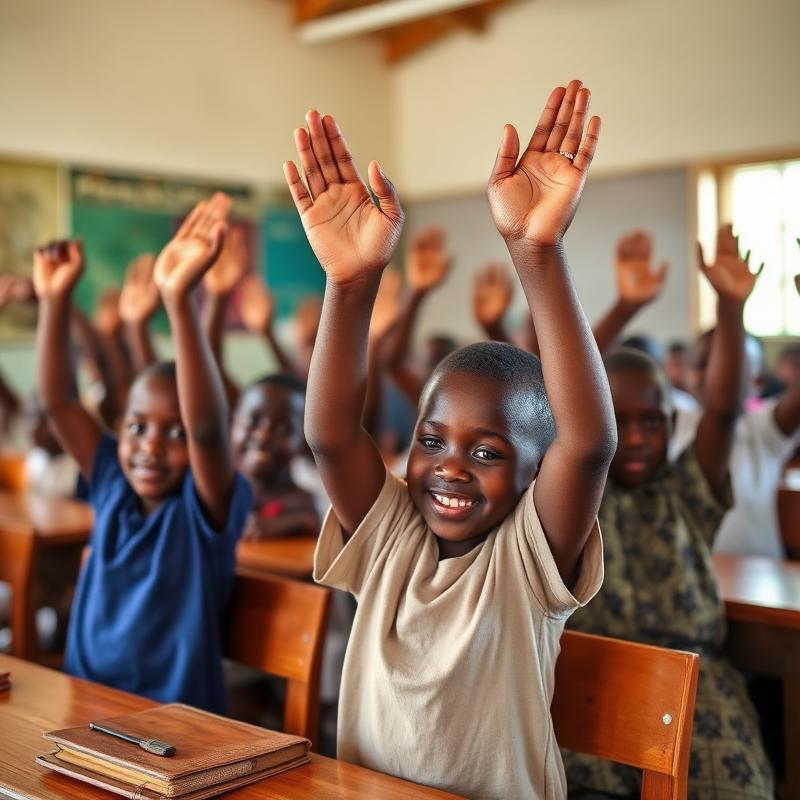
In many rural communities across Africa, education is still considered a privilege — and for girls, it is often a privilege withheld. According to UNESCO, more than 32 million girls of primary and secondary school age in sub-Saharan Africa are out of school. Behind that number are real children: bright, curious, and capable, but trapped by circumstances they did not choose.
Why are girls being left out?
- Distance. In rural areas, the nearest school can be 5 to 15 kilometers away. Parents fear for their daughters' safety on long, isolated walks — so they keep them home.
- Poverty. When families cannot afford uniforms, books, or fees for all their children, boys are prioritized. Girls are pulled out first.
- Early marriage and pregnancy. Without a school nearby and a future to aim for, girls as young as 12 are married off, ending their education permanently.
- Lack of facilities. Schools without clean water, toilets, or private spaces for menstrual hygiene drive teenage girls away every single month.
- Cultural bias. In many communities, a girl's role is still defined by the home — fetching water, cooking, caring for siblings — not the classroom.
"When you educate a girl, you educate a family, a village, and a generation."
Why building schools in rural areas matters
A school in the village changes the equation overnight. When the classroom is a short, safe walk from home, attendance jumps. When there are clean toilets and water, girls stay in school through their teenage years. When a community sees its own daughters reading, calculating, and dreaming aloud, the cultural conversation begins to shift.
Research from the World Bank shows that every additional year of schooling a girl receives can increase her future earnings by up to 20%. Girls who finish secondary school marry later, have healthier children, and are far more likely to send their own daughters to school. One school. One generation. A different future.
What we are doing — and how you can help
At the Opondo & Osamaoda Foundation, we are working with rural communities in East Africa to build classrooms, equip them with the basics that keep girls enrolled, and support families who choose education for their daughters. Every brick laid is a door opened.
You can be part of this. A donation — large or small — buys desks, builds walls, trains teachers, and tells a girl in a remote village that the world has not forgotten her.